
If you don’t know much about Continuous Glucose Monitors (CGMs), it can be helpful to go over the basics of CGM. Here are the answers to all your questions!
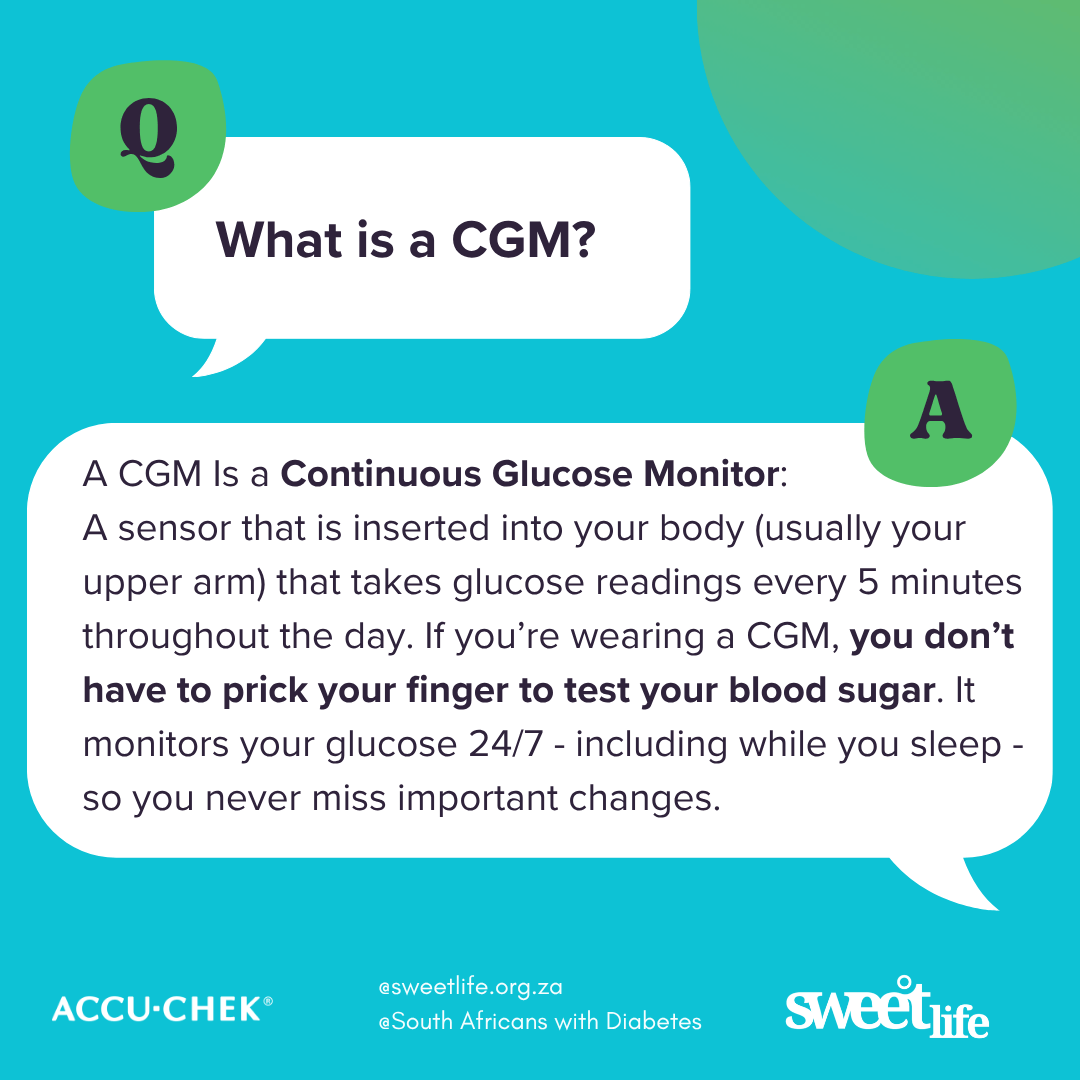
What is a CGM?
For those living with Type 1 diabetes, and many people living with Type 2 diabetes, CGMs help make managing diabetes much easier.
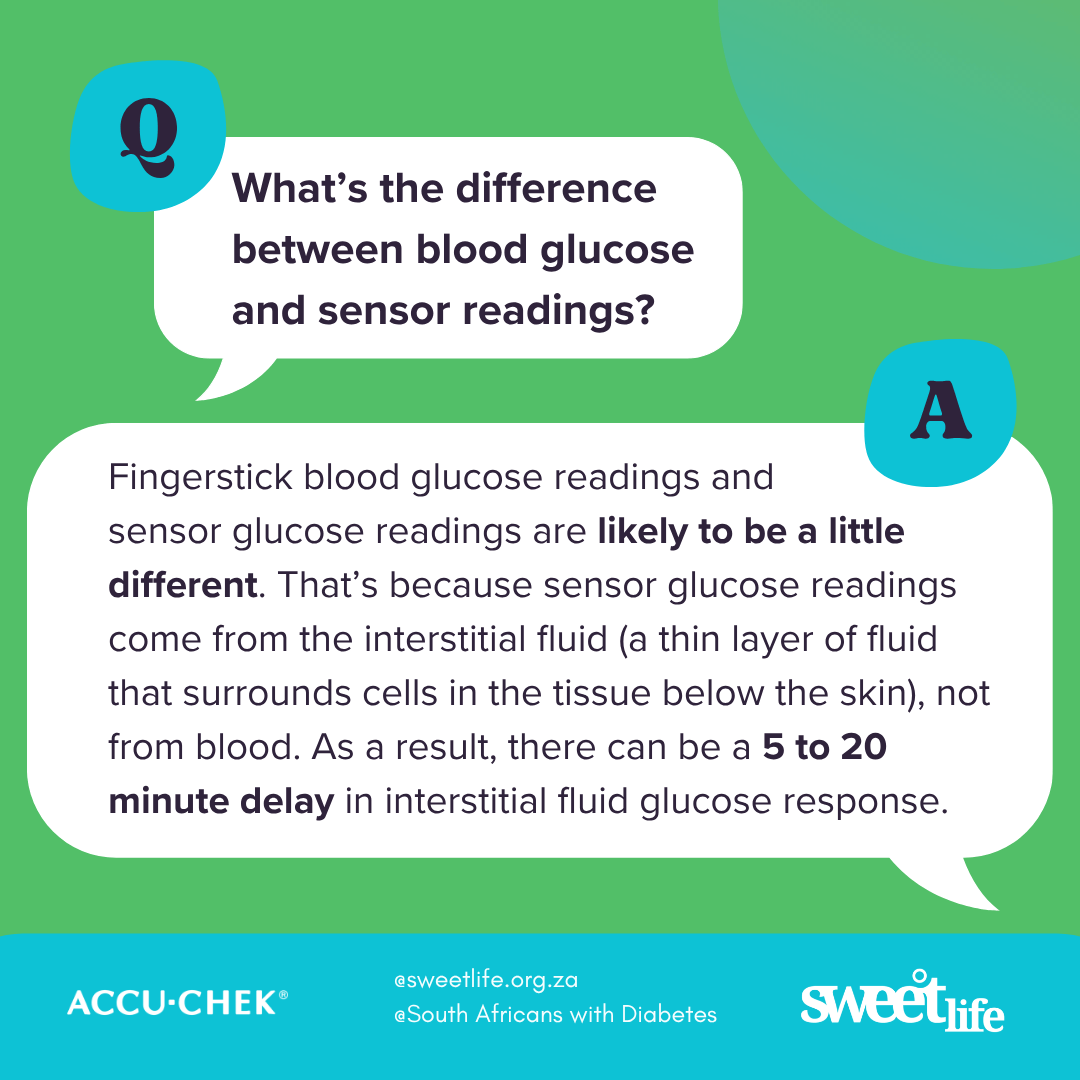
What’s the difference between blood glucose and sensor readings?
One of the most important things to understand is that the numbers on your CGM might not immediately and exactly match your blood glucose reading.
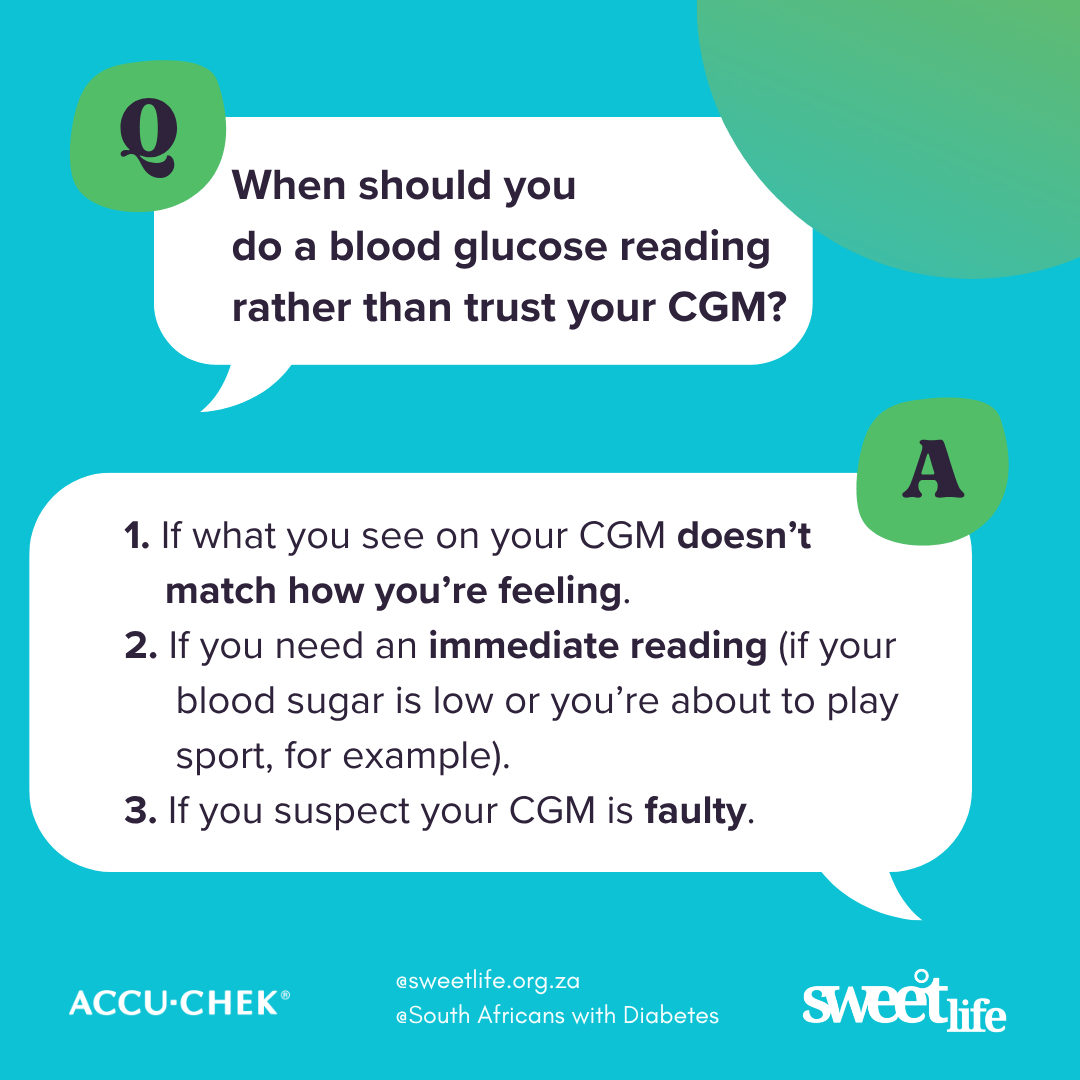
When should you do a blood glucose reading rather than trust your CGM?
Sometimes it’s important to check your blood sugar with a glucometer, rather than trust your CGM completely.
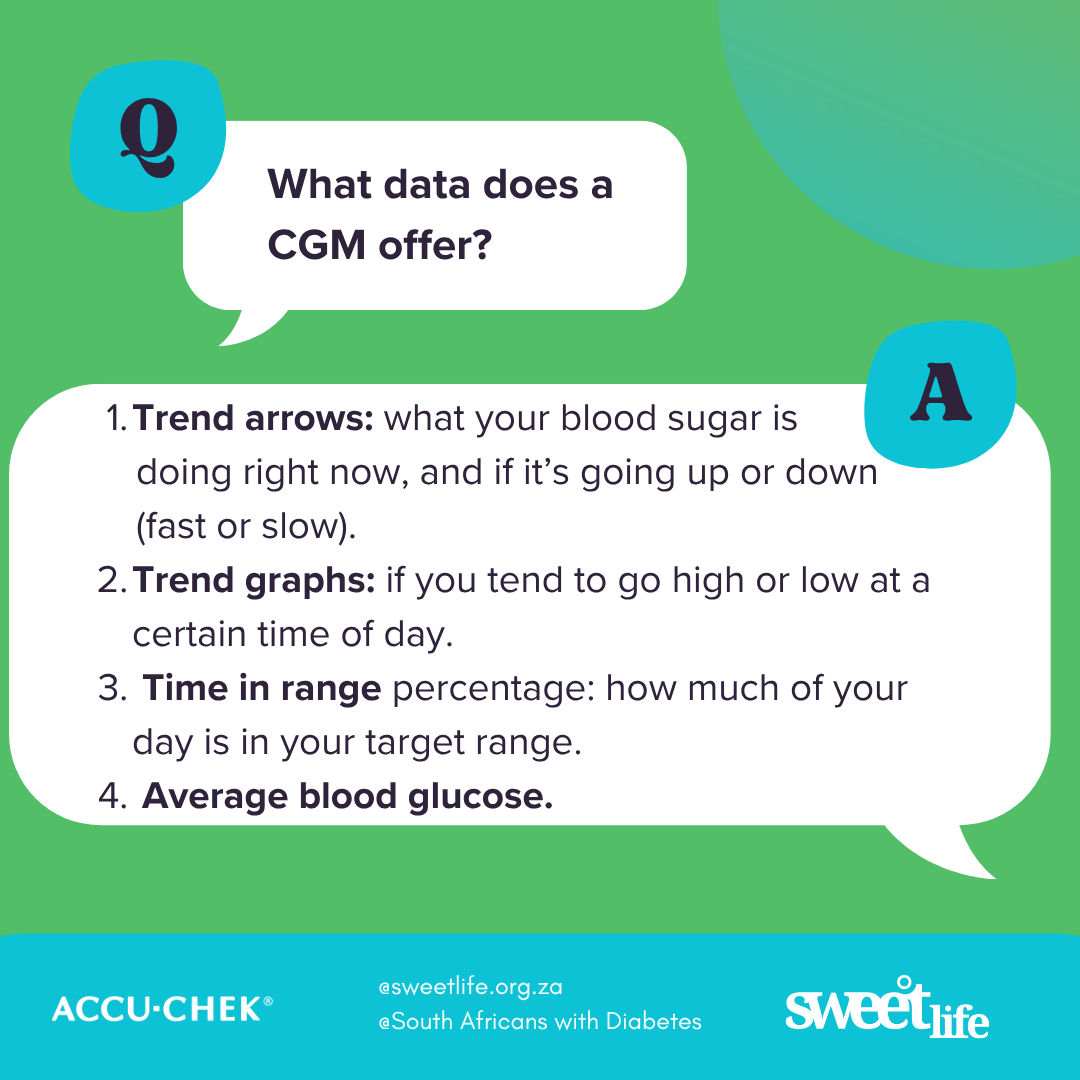
What data does a CGM offer?
Understanding what your CGM offers means you can get the most out of the technology.
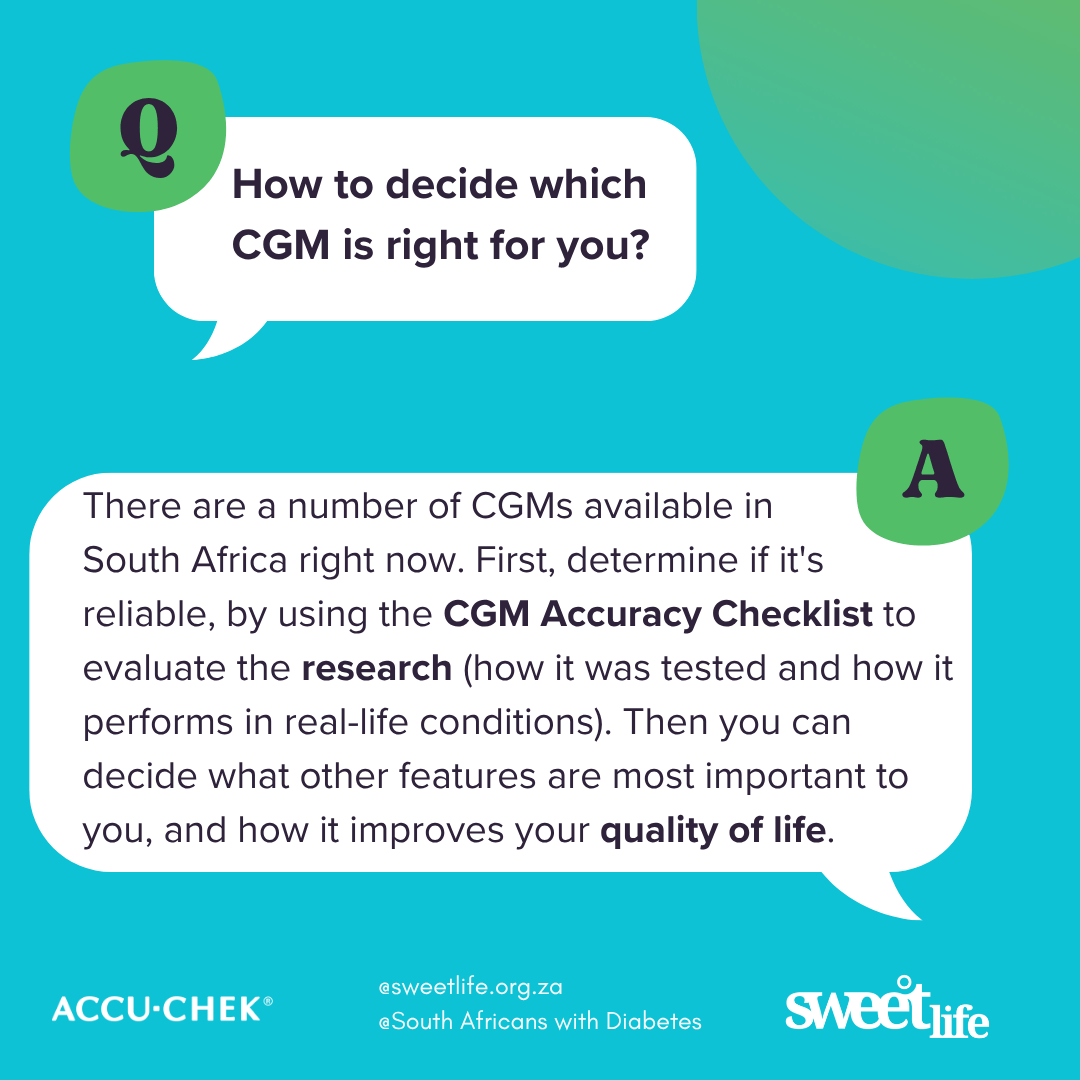
How do you decide which CGM is right for you?
There are a number of different CGMs currently available in South Africa. Here is a CGM Accuracy Checklist that lets you test whether or not a CGM has undergone the necessary tests to prove that it’s reliable.
Do you use a CGM?
Let us know what your experience is with CGM in the comments below, or on Facebook.
Discover more from Sweet Life
Subscribe to get the latest posts sent to your email.


Thank you for this CGM summary. I would like to test a CGM performance living with insulin resistance at some point. My aim is to put the per-diabetes into permanent remission by observing some hidden red flags with regards to lifestyle and nutrition choices. This could be the hidden key and cannery in the coalmine wrt hidden sneaky foods and times my body is vulnerable without my knowledge. I hope to be able to afford such a N of 1 experiment at some point. It could prove very valuable in post menopause.
This is a terrific idea, Sylvia! Everyone’s body responds so differently to different types of food that I’m sure it would be really enlightening to see what your body’s response is to foods you eat regularly.